

Third-Party Risk Management
Third-Party Risk Management Services
We verify the risks attached to your business partners, suppliers, distributors and investment targets — identity, reputation, compliance and beneficial ownership — on the evidence, before you decide.
The initial consultation is held in confidence.
When do you need third-party due diligence?
The right question asked before a business relationship begins prevents most of the financial, legal and reputational risk that would otherwise surface later. In the situations below, an independent review before the decision puts that decision on verifiable ground.
Selecting a new supplier or partner
Before a long-term relationship, a contract or a payment commitment, the other party's identity, history and reputation should be verified.
Distributor and dealer assessment
The compliance history, financial strength and beneficial owners of a party that will represent your brand should be clear before you decide.
Mergers and acquisitions (M&A)
The target company's ownership structure, undisclosed connections and unreported risks should be examined as part of due diligence.
Other 3 situations
EU supply chain compliance
Regulations such as the CSDDD and Germany's LkSG require — or will require — due diligence along the chain, including your supplier's supplier.
High-risk country or sector
Geographies and sectors with elevated sanctions, corruption or money laundering exposure call for an additional layer of verification.
Tenders and major procurement
In high-value purchases, bidders should be examined for conflicts of interest, shell structures and concealed ownership.
If you are facing one of these situations: let us discuss your situation in confidence →
Your supplier's risk is now your risk
The EU Corporate Sustainability Due Diligence Directive (CSDDD) places a due diligence obligation on large companies across their supply chains; for companies in scope, the price of neglect can reach an administrative fine of up to 3% of net worldwide turnover. Even if you are not directly in scope, buyers who are pass these requirements down to their suppliers through contract — and a single weak link in the chain puts the entire commercial relationship at risk.
30%
30% of breaches involved a third party — a share that doubled in a single year.
$4.91M
The average cost of a supply chain–related data breach; at 267 days (to detect and contain), the longest-running breach type.
83%
Organizations identify a significant share of third-party risks only after due diligence has been completed.
2029
EU supply chain due diligence obligations (CSDDD) apply from 2029; the duty is passed down along the chain.
Sources: Verizon, 2025 Data Breach Investigations Report · IBM & Ponemon Institute, Cost of a Data Breach 2025 · Ponemon Institute & RiskRecon, 2022 · Gartner, 2019 · EU Corporate Sustainability Due Diligence Directive (2024/1760), as amended by (EU) 2025/794 and (EU) 2026/470 (Omnibus I).
While you are checking your business partner, measure your own fraud risk too
ACFE fraud triangle: Pressure · Opportunity · Rationalization — plus Process/Records · Conflict of interest · Compliance & Governance; a 0–100 score across six areas.
The first step in managing third-party risk is seeing how exposed your own organization is to it. A 21-question preliminary assessment makes the critical indicators in conflicts of interest and procurement processes visible.
21 questions
Structured assessment
~5 minutes
Quick preliminary assessment
Preliminary risk analysis
Starting point for expert work
Measure Your Organization's Risk →
✓ACFE-aligned · ~5 minutes · downloadable PDF report
The simulator does not replace an investigation; it helps identify risk areas that may require expert examination.
The greatest danger is discovering the risk after the relationship has begun.
A connection that emerges after the contract is signed costs more than one thing: unrecoverable payments and financial loss; legal liability arising under supply chain legislation; reputational damage from the brand being associated with the wrong party; and a cost in time that grows for as long as the relationship lasts.
Most organizations do not see that connection in time; only one in three holds a complete inventory of the parties it is exposed to. The later the risk is seen, the more it costs: exit becomes harder once it is bound by contract, and records and connections grow untraceable with time. That is why the first step is not a large audit; it is a short, confidential assessment before the decision.
What do we examine in a third-party investigation?
Every engagement is planned according to the nature of the relationship and its risk level. Using open sources, official records and field verification together, we compare what has been declared with what is actually the case, on the evidence.
Identity and corporate structure verification
Trade registry records, shareholding structure, management and operating status; whether the company genuinely exists and matches its own declarations.
Reputation and adverse media screening
Press archives, news and open sources for adverse records, litigation and reputational indicators concerning the party.
Compliance and regulatory checks
Assessment of international compliance risk through sanctions lists, PEP records and watchlist screening.
Other 3 areas we examine
Fraud and conflict of interest indicators
Signs of hidden partnership, shell structures, steered procurement and conflicts of interest.
Ultimate beneficial owner (UBO) analysis
Identifying the beneficial owners behind apparent ownership, together with connected persons and concealment structures.
Consolidated risk score
All findings brought together in a single, readable risk framework across identity, reputation, compliance and financial dimensions.
The scope follows the risk level of the relationship: let us define the right scope for you together →
How we conduct the investigation
The aim is not to clear a party or to condemn one; it is to give the decision-maker a reliable, verifiable and defensible basis. Every step has a concrete output.
01Scope and profiling
The nature of the relationship, its risk level and priorities are established; the party to be examined and its connections are defined.
OutputInvestigation plan
02Sources and OSINT
Official records, commercial databases and publicly available sources are screened and compiled systematically.
OutputSource matrix
03Compliance and regulatory screening
Sanctions, PEP, watchlist and adverse media records are screened; compliance risk is assessed.
OutputCompliance findings set
04Verification and field checks
Critical findings are confirmed against cross-sources and, where needed, through field verification.
OutputVerification notes
05Reporting and risk score
Findings, red flags and recommendations are presented to the decision-maker in a single readable and defensible report.
OutputRisk report and score
Which red flags do we watch for in a business partner?
A single signal does not amount to wrongdoing on its own; but when several appear together, the investigation needs to go deeper. Our report makes these signals visible, with the reasoning behind them.
Concealed beneficial owner
Ownership masked by shell companies or complex chains; the real decision-maker nowhere in view.
Sanctions or PEP connection
The party or connected persons linked to sanctions lists, PEP records or high-risk jurisdictions.
Identity and address inconsistency
Declared address, contact or activity details that do not match official records; a company that exists only on paper.
Other 3 red flags
Adverse media and litigation history
Press and court records of fraud, compliance breaches or reputationally damaging events.
Signs of conflict of interest
Possible hidden partnership, family ties or steered procurement between an employee and the party.
Unrealistic promises or pricing
Prices, guarantees or performance commitments that market conditions cannot explain; references that cannot be verified.
If one of these signals sounds familiar: let us start an independent investigation before you decide →
What do we deliver at the end of the investigation?
The scope of the report depends on the nature of the relationship; in every case the aim is for management to see clearly who it will be working with, what the risk is and which steps are available.
Request a Preliminary Assessment →
The initial consultation is confidential and without obligation. If the findings will go to litigation or arbitration: Litigation Support
- Executive summary and consolidated risk score
- Identity, corporate structure and ultimate beneficial owner (UBO) map
- Compliance findings: sanctions, PEP and watchlist screening results
- Reputation and adverse media assessment
- Red flags identified, with the reasoning behind them
- The scope of sources used and the verification method applied
- Actionable recommendations and monitoring points before the decision
Investigative by origin. Evidence-based. Decision-focused.
We treat partner and supplier risk not merely as a compliance form, but through investigative discipline, open-source research and management decision-making together.
Every engagement is run by the founder.
Hasan Alsancak — former Head of the Financial Crimes and Aggravated Fraud Units, Turkish National Police; FBI National Academy, 205th Session. 30+ years; Prosecure since 2014. He defines the scope with you, leads the investigation and signs the report.
Not every investigation reaches the same conclusion.
The purpose of an independent investigation is not to clear a party or to rule one out; it is to put the decision on verifiable ground.
A supplier's beneficial owner identified before signature
Trade registry records, the ownership chain and open-source analysis were examined together. A shell structure behind the apparent ownership, and a conflict of interest with a company employee, were confirmed; the process was stopped before the contract was signed.
Review the case → 02 Risk not confirmedA partner in a high-risk country approved with confidence
Sanctions, PEP and adverse media screening were carried out alongside verification of the corporate structure. The alleged risk indicators were found to be unsupported, and the relationship was established without unnecessary delay.
Review the case → 03 Partial risk — monitoring recommendedLimited risk in a prospective distributor, managed through a protective contract clause
Partial weakness was identified in financial strength and reputational indicators. The nature of the risk was reported, and the relationship continued under control with a protective contract clause and a recommendation for periodic monitoring.
Review the case →For confidentiality, company, sector, individual, amount and country details are withheld; events are anonymized and summarized.
If you are facing a similar decision: let us discuss your situation in confidence →
Third-party risk rarely comes alone.
A suspicion of fraud, a hidden asset or a litigation dimension may surface during the investigation. Our related services step in with the same investigative discipline.
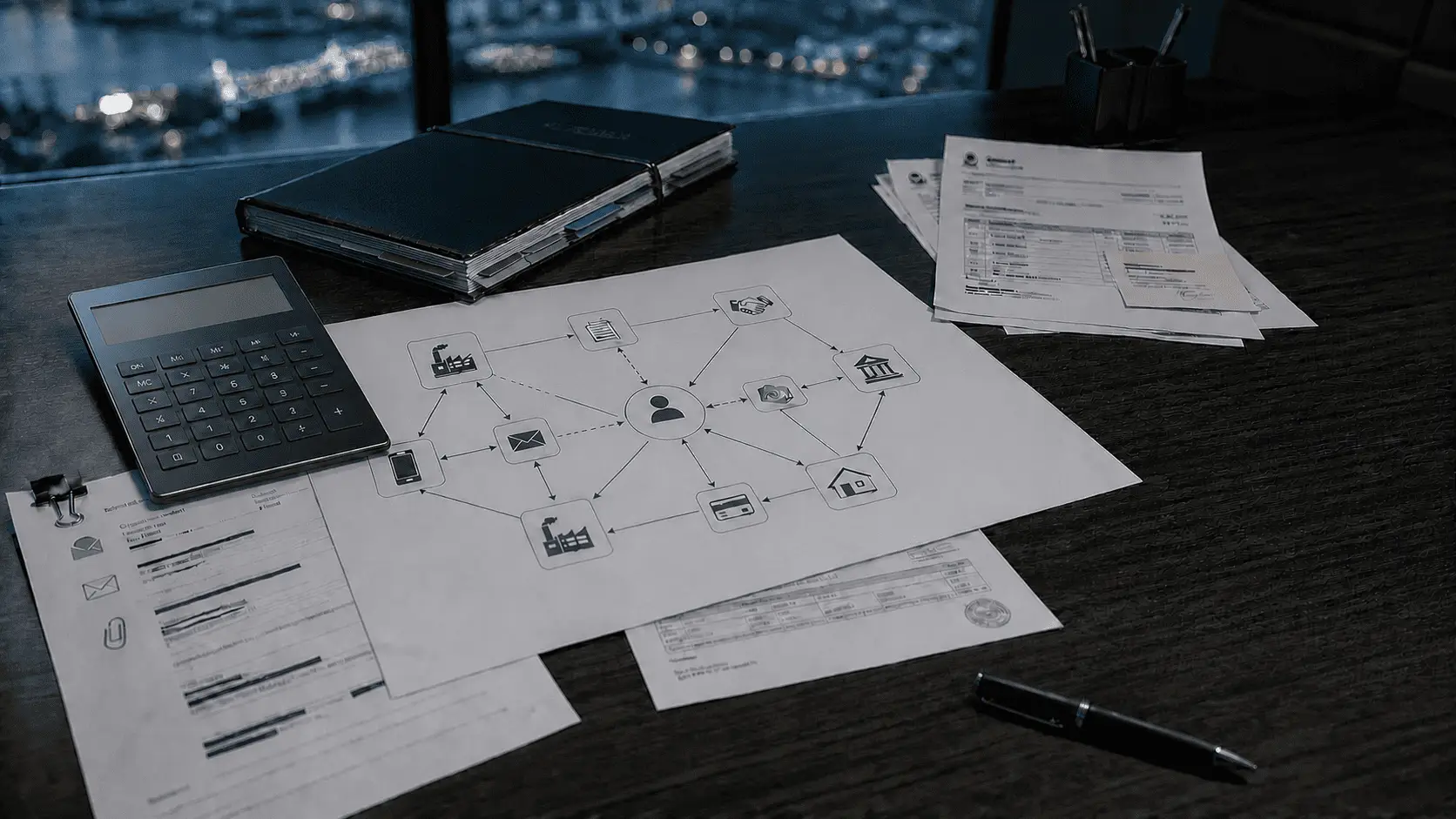
Fraud Investigation
Investigate allegations of fraud involving employees, executives or business partners with confidentiality and impartiality.
Explore the service →
Asset Tracing & Recovery
Investigate assets, connections and concealment structures before debt recovery and litigation.
Explore the service →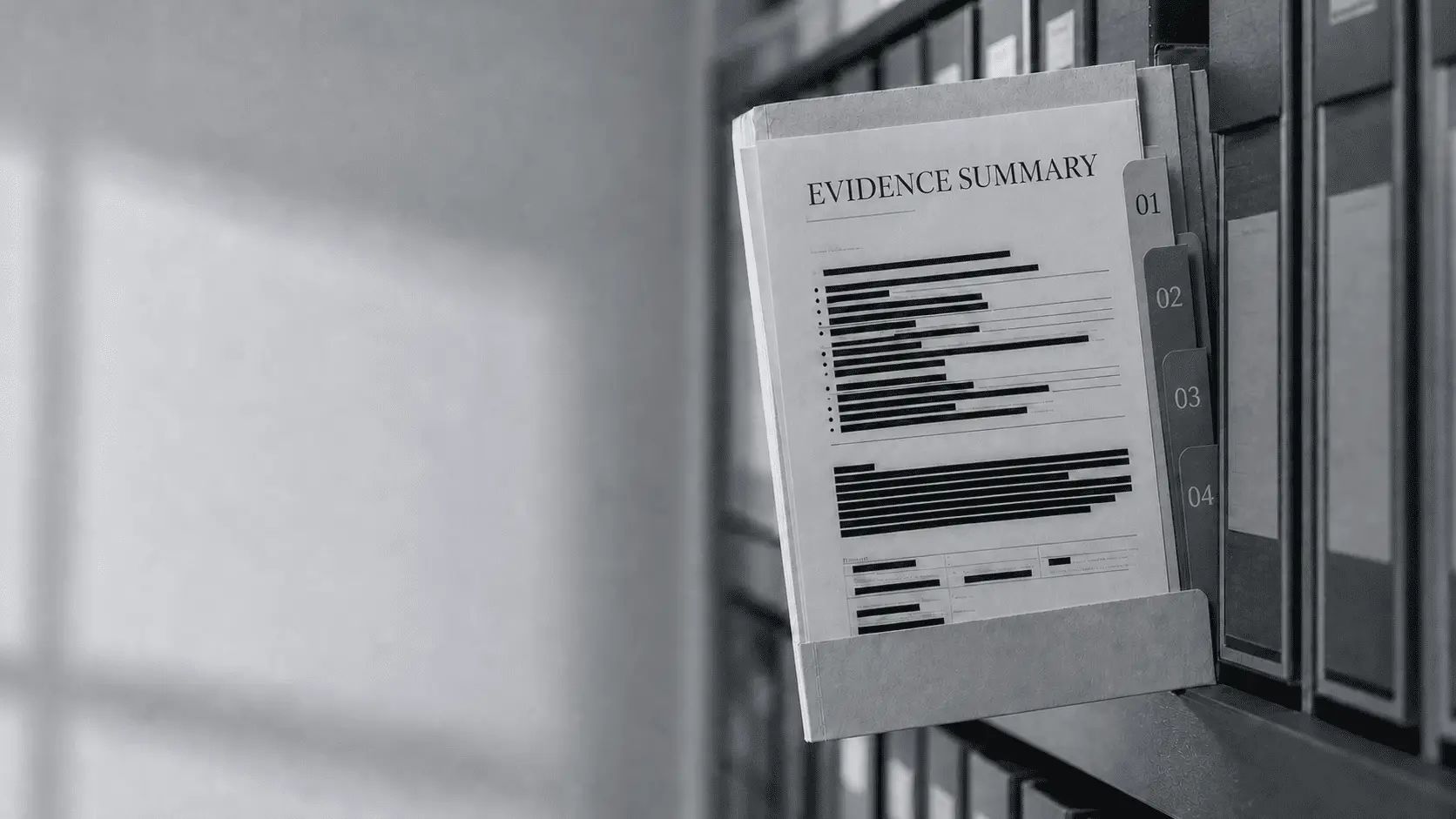
Litigation Support
Relationship mapping, event chronology and defensible findings for disputes, arbitration and litigation.
Explore the service →In-depth intelligence before a corporate decision: Corporate Intelligence · Hiring right is the first step in risk management: Employment Background Check · Know Your Employee™
Measure your own organization's risk score: Fraud Risk Simulator · About Prosecure: About Us · Founder
Common questions about third-party risk due diligence
Basic questions on the scope of the process, its sources, its legal character and our approach to confidentiality.
What is third-party risk management?
Which companies and situations is this investigation suitable for?
Which subjects and dimensions are examined?
Which sources is the information obtained from?
How long does an investigation take?
What is the legal character of the investigation, and how can the findings be used?
How is confidentiality maintained?
What does it cost not to investigate a business partner?
How do we start?
Three steps: a confidential conversation, a short preliminary assessment, a jointly defined scope. Commitment begins only when the scope is approved.
Request a Preliminary Assessment →
The initial consultation is confidential and without obligation. We respond within one business day.
- 1 · Confidential first conversation — We listen to which party you are dealing with, the decision you need to take and how urgent it is.
- 2 · Preliminary assessment and scope — The risk level of the relationship is assessed; a proposed scope and timeline are presented.
- 3 · Investigation and report — Sources are screened and critical findings verified; the risk score and recommendations are reported.